
Table of Contents
Introduction to Astronomical Events and Economic Sentiment
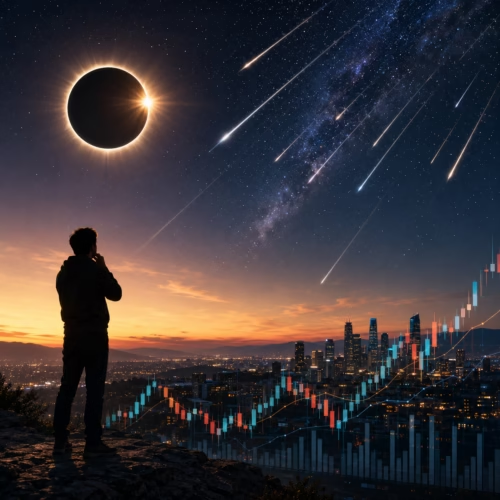
Astronomical events have long captivated human imagination and have played significant roles across various cultures throughout history. Among these events, total solar eclipses and meteor shower peaks have attracted particular attention due to their dramatic and often awe-inspiring nature. For centuries, civilizations have interpreted these occurrences as omens or divine signs, linking them closely to societal changes and personal fortunes.
Total solar eclipses, where the moon completely obscures the sun, present a rare opportunity for shared awe and wonder. Historically, such eclipses have been associated with anxiety and fear, often interpreted as signals of forthcoming calamity. In contrast, meteor showers—rapid bursts of glowing meteors caused by comets—are frequently perceived as symbols of hope and renewal. These celestial events stimulate human curiosity and invoke sentiment, potentially influencing collective mood and behavior.
This exploration of the impact of astronomical events on consumer sentiment and stock market volatility is rooted in the awareness that such experiences resonate deeply within societal consciousness. The ability of celestial phenomena to evoke strong emotional responses may correlate with economic behaviors. For instance, heightened excitement during a total solar eclipse could lead to increased consumer spending as individuals seek to create memorable experiences associated with the event. Alternatively, the perceived uncertainty associated with an eclipse might contribute to a cautious approach among investors, reflecting a complex psychological interplay between celestial occurrences and economic activities.
In this context, understanding the relationship between astronomical events and consumer behavior becomes essential, particularly in an era marked by market fluctuations influenced by public sentiment. As researchers delve into this fascinating intersection, it becomes imperative to analyze how the reactions to these astronomical phenomena may manifest in both consumer behavior and stock market dynamics.
The Science Behind Consumer Sentiment
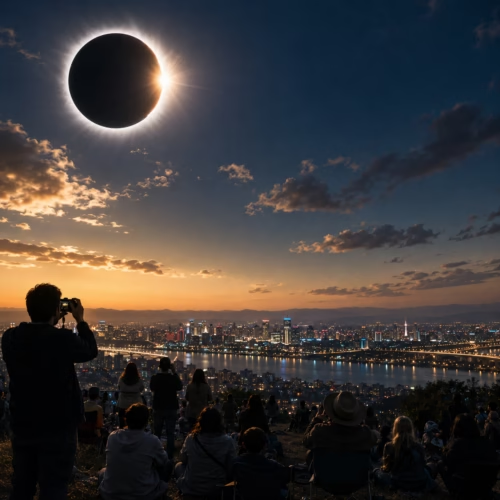
Consumer sentiment refers to the overall attitude of individuals toward economic conditions, influencing their spending behaviors and investment decisions. This psychological concept is an essential aspect of economic theory, as it reflects how optimistic or pessimistic consumers feel about their financial situation and the economy at large. High consumer sentiment typically correlates with increased spending, while low consumer sentiment can lead to reduced consumption, directly impacting the stock market’s performance.
Several factors influence consumer sentiment, and these can be broadly categorized into psychological, social, and economic elements. Psychologically, emotions play a critical role in shaping consumer perceptions. Factors such as fear, confidence, and optimism can greatly sway an individual’s view on economic stability. For example, positive news regarding job growth can boost consumer confidence, leading individuals to spend more freely, bolstering economic activity and, consequently, stock market performance.
Social influences, including peer opinions and cultural trends, can also significantly affect consumer sentiment. When individuals observe their peers engaging in spending or investing behaviors, they may feel encouraged to follow suit, creating a cascading effect on the economy. Furthermore, economic indicators such as inflation rates, interest rates, and unemployment rates provide consumers with tangible data that can shape their sentiment. As consumers evaluate these indicators, they adjust their spending behaviors accordingly, contributing to fluctuations in stock market volatility.
In summary, understanding consumer sentiment is crucial for grasping how it affects personal behavior and broader economic outcomes. Its interplay with psychological, social, and economic factors is paramount in determining how consumers respond to market trends and influences, ultimately impacting the stock market’s stability and movements.
Methodology: Analyzing Data from Astronomical Events
The examination of the influence of astronomical events on consumer sentiment and stock market volatility necessitates a robust and systematic approach to data analysis. This section delineates the empirical methodologies employed to achieve valid and reliable results in this area of research.
To begin with, data sources were meticulously selected to ensure comprehensive coverage of relevant astronomical events, alongside consumer sentiment and stock market performance metrics. Astronomical data was sourced from established celestial databases, which catalog events such as solar eclipses, lunar phases, and planetary alignments, providing precise dates and times. Concurrently, consumer sentiment indices, derived from surveys and market research reports, were utilized to quantify the prevailing attitudes and feelings among consumers during the periods surrounding these events. Additionally, stock market data was gathered from financial market databases, focusing on key indices such as the S&P 500 and Dow Jones Industrial Average, noting daily fluctuations in prices and trading volumes.
Statistical tools played a vital role in the analysis, with regression analysis employed to assess correlations between astronomical occurrences and changes in consumer sentiment and stock market volatility. Using software such as R and Python, various algorithms were utilized to run time series analyses and predictive modeling. This allowed for the identification of patterns and anomalies associated with significant astronomical events. Furthermore, a comparative analysis was conducted to contrast periods of heightened astronomical activity with more subdued intervals to gauge the relative impact on market dynamics.
The analytical framework was strengthened by incorporating control variables, including macroeconomic indicators and external market conditions, to isolate the effects of astronomical events. By adopting these methodologies, this study aims to provide an in-depth understanding of how cosmic occurrences potentially shape consumer behavior and influence stock market trajectories.
The Statistical Analysis of Total Solar Eclipses on Financial Markets

Recent studies have examined the relationship between total solar eclipses and their effects on consumer sentiment as well as stock market volatility. The analysis focuses on data collected during historical total solar eclipses, aiming to identify any significant statistical correlations. An intriguing pattern emerges when considering consumer behavior in proximity to these astronomical events.
One key finding is that total solar eclipses tend to evoke heightened consumer interest and emotional responses, which can lead to fluctuations in various sectors of the stock market. For instance, data analysis reveals a noticeable increase in retail stocks in the weeks leading up to an eclipse, suggesting that consumers may engage in increased spending as they prepare for the event. This pre-eclipse buying frenzy is often reflective of the collective excitement and curiosity generated by the impending celestial spectacle.
Furthermore, stock market volatility often sees a temporary spike during and immediately following a total solar eclipse. Graphs illustrating average stock price movements on trading days surrounding these occurrences demonstrate increased trading volume and price shifts. The fluctuation can be attributed to investor psychology and sentiment, heavily influenced by the rarity and grandeur of a total solar eclipse. During these periods, investors may exhibit irrational behavior, leading to heightened volatility in various sectors, particularly those more sensitive to consumer sentiment.
Visual representations, such as charts comparing stock market performance during total solar eclipses against normal trading periods, highlight these unusual trends. The contrast is apparent; periods of eclipses show a distinct divergence in market behavior. In conclusion, the statistical analysis indicates a significant impact of total solar eclipses on consumer sentiment and stock market volatility, suggesting that these celestial events, while astronomical in nature, resonate deeply within financial dynamics.
Meteor Shower Peaks: Their Effect on Economics and Sentiments
Meteor showers, often observed with awe and excitement, have garnered interest not just for their beauty but also for their potential impact on economics and consumer sentiments. As several studies suggest, the peaks of significant meteor showers may influence public mood and behavior, thus indirectly affecting financial markets. The concept revolves around the notion that astronomical events incite emotional responses, which in turn can lead to shifts in consumer confidence.
Statistical analysis has indicated a correlation between major meteor shower events and fluctuations in stock market volatility. Research shows that during prominent meteor shower peaks like the Perseids or Geminids, there tends to be a marked increase in consumer spending and investment activity. This phenomenon could be attributed to the themes of wonder and exploration—hallmarks of such astronomical events—that can uplift consumer spirits. Markets often respond positively when investor sentiment is heightened, reflecting a ripple effect from these celestial displays.
Furthermore, anecdotal evidence from financial analysts supports the idea that heightened public engagement with meteor showers correlates with increased buying activity in specific sectors. For example, companies associated with outdoor gear, entertainment, and even travel often see positive trends during these periods. Investors, too, may be inclined to purchase stocks of businesses that capitalize on this surge of consumer enthusiasm, leading to noticeable spikes in their market performance.
Despite the intriguing connections drawn between meteor showers and market sentiment, it remains essential to approach this topic with a critical eye. While preliminary findings in specific cases may indicate a pattern, further empirical research is required to establish a consensus. The interplay between celestial events and economic indicators invites ongoing exploration and analysis within the financial community, presenting an opportunity to understand consumer behavior from a unique perspective.
Long-Term Effects of Space Exploration on Science Education
Over the past few decades, space exploration has significantly influenced science education, creating transformative initiatives designed to inspire a new generation of learners. The missions undertaken by various space agencies, such as NASA and ESA, have not only expanded our understanding of the cosmos but have also ignited interest in science, technology, engineering, and mathematics (STEM) fields among students worldwide.
One of the most notable long-term effects of space exploration on science education is the integration of space-related topics into curricula. As missions to Mars and beyond capture public imagination, educators have increasingly incorporated astronomy and space science into their lesson plans. This integration allows students to engage with fundamental scientific principles through the exciting lens of outer space, effectively making learning more appealing and relevant. Programs like NASA’s “Space Launch System” and various online resources enrich classroom lectures by providing real-time data and multimedia resources, fostering an interactive learning environment.
Furthermore, space exploration initiatives often result in collaborative projects that bridge the gap between formal education and practical experience. For instance, partnerships between educational institutions and space agencies create opportunities for students to participate in internships, competitions, and hands-on projects that cultivate critical thinking and problem-solving skills. Such experiences expose students to the intricacies of space missions and the scientific processes behind them, ultimately equipping them with valuable knowledge and expertise.
Moreover, public outreach programs designed to communicate the significance of space exploration have demonstrated positive effects on community engagement. Events, workshops, and interactive exhibits at public science centers often feature space exploration themes, encouraging participation from families and individuals of all ages. This heightened public interest serves to inspire future innovators who may contribute to advancements in technology and scientific research. Through these initiatives and by nurturing a passion for science, the long-term impact of space exploration on education continues to unfold, fostering a culture of inquiry and discovery.
Pedagogical Applications of Space Missions
The exploration of outer space has headlined significant advancements not only within scientific realms but also in educational frameworks. The integration of space exploration into educational curricula has become a prominent strategy to heighten student engagement and understanding of complex scientific concepts. Educators leverage various pedagogical approaches to make astronomy accessible and relatable, fostering an environment in which students can explore the intricacies of the universe.
One of the most notable pedagogical strategies is project-based learning, where students engage in hands-on projects that relate to actual NASA missions or the latest astronomical discoveries. For instance, case studies from the Mars rovers have inspired collaborative classroom initiatives wherein students analyze data as real scientists would. Such applications not only solidify their abstract scientific knowledge but also instill invaluable skills such as critical thinking and teamwork.
Furthermore, numerous teaching materials have been developed to enhance the educational experience. Resources such as interactive simulation software, virtual reality experiences, and comprehensive multimedia tools allow learners to navigate the cosmos from their classrooms. Programs like these serve as catalysts for stimulating discussions about space missions, including their technological, engineering, and social implications.
Innovative approaches in teaching astronomy often incorporate current events in space exploration, providing students with an opportunity to engage with unprecedented developments. By delving into missions such as the Artemis program or the James Webb Space Telescope, educators can draw parallels between scientific endeavors and historical milestones in space exploration, enriching students’ understanding of their significance.
Overall, the use of pedagogical strategies linked to space missions effectively enhances students’ learning experiences and enthuses them about science, technology, engineering, and mathematics (STEM) disciplines. As the cosmos continues to captivate human curiosity, educational methodologies that incorporate these celestial explorations will likely play a pivotal role in shaping the future scientists and innovators of tomorrow.
Consumer Behavior During Astronomical Events: Case Studies
Astronomical events have been documented throughout history as unique occurrences that capture the public’s imagination. They influence consumer behavior significantly, often leading to observable shifts in market dynamics. Case studies of specific astronomical events reveal how they can catalyze consumer behavior and trigger varied responses in commerce.
One notable instance occurred during the solar eclipse of August 21, 2017, which crossed the continental United States. Businesses situated along the path of totality experienced remarkable sales surges, with some reports indicating up to a 500% increase in demand for eclipse-related products. Retailers capitalized by offering goggles, viewing glasses, and other merchandise tailored to eclipse enthusiasts. This phenomenon exemplifies how a natural event can shift consumer sentiment, compelling individuals to purchase items associated with their experiences.
Similarly, during meteor showers, such as the Perseids, retailers have reported enhanced sales—particularly in sectors like camping and outdoor gear. In anticipation of these celestial shows, consumers often purchase tents, sleeping bags, and other essentials to enhance their viewing experiences. An increase in social media activity around these events demonstrates how communal interest can further drive purchasing trends, showing a link between shared enthusiasm and economic behavior.
Research into consumer psychology suggests that astronomical events evoke a sense of wonder and curiosity that can compel consumers to engage in novelty-seeking behavior. Such events frequently trigger a desire for experiential purchases, with consumers willing to invest in products and services that enhance their enjoyment. The interplay between celestial phenomena and consumer behavior highlights a still largely untapped facet of market analysis, indicating that businesses can benefit from understanding these correlations more deeply.
Conclusion: Cosmic Forces and Economic Trends
Throughout the analysis presented in this blog post, we have explored how astronomical events serve as more than mere scientific phenomena; they significantly influence consumer sentiment and stock market volatility. The intricate relationship between cosmic occurrences and individual experiences suggests a deep-seated connection that transcends mere coincidence. As celestial events unfold, they often evoke emotional and psychological responses that can sway public perception and, subsequently, economic behaviors.
Consumer sentiment, a vital determinant of economic performance, has demonstrated sensitivity to celestial events. For instance, eclipses, planetary alignments, and meteor showers not only capture public interest but also spur curiosity and affect mood, which translates into variations in spending habits. The ripple effects observed in retail sales and market trends during such astronomical occurrences indicate that human beings are innately influenced by the cosmos.
Furthermore, stock market volatility appears to correlate with significant astronomical phenomena. The analysis reveals patterns where substantial fluctuations in stock prices coincide with important celestial events. This causal relationship emphasizes the potential impact of collective consciousness—shaped by media portrayals and individual interpretations of cosmic happenings—on market dynamics. Investors, reacting to both sentiment and the shared narrative of these events, contribute to volatility as they adjust their portfolios in response to perceived risks or opportunities.
In summary, the interplay between celestial events and economic trends is a compelling subject that sheds light on the larger context of human economic behavior. Understanding these connections not only enhances our grasp of consumer sentiment and stock market reactions but also underscores the profound ways in which the cosmos influences our lives and choices. The exploration of these themes opens doors for future research, reminding us that the effects of astronomical events may resonate far beyond the night sky, affecting economies and societies at large.
Data Science Unlocks 2025’s Meteor Shower Prediction Magic
🧩 Tour information site – wiztour.com